DIGITAL HERITAGE / 3D VR STATION
Hermann Sprauer 3D / VR
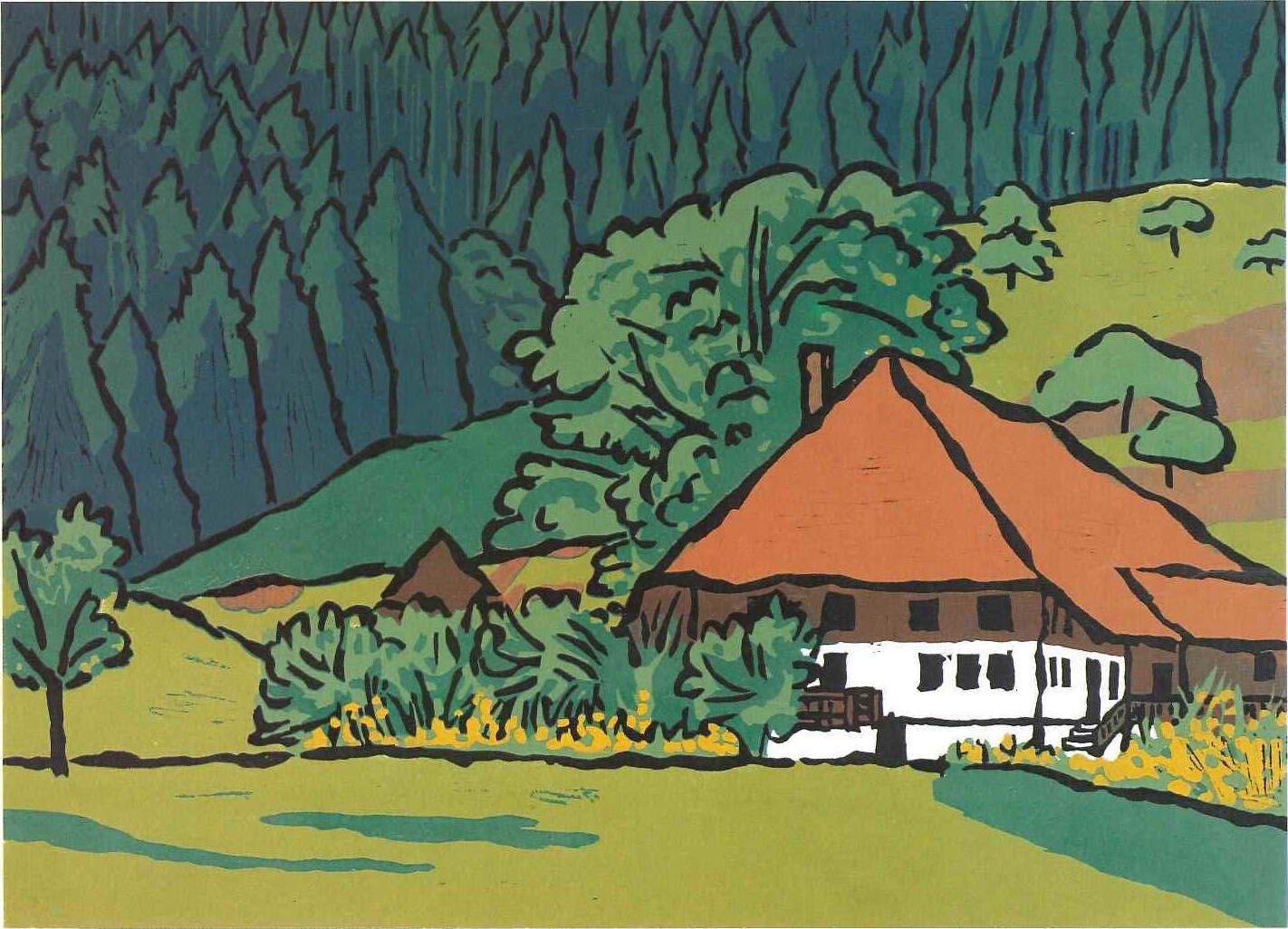
An interactive translation of Sprauer's landscapes: from original linocuts to hand-built stylized scenes and photorealistic Gaussian Splat captures of the present-day locations.
01 / THE PROJECT
An analogue landscape, made navigable
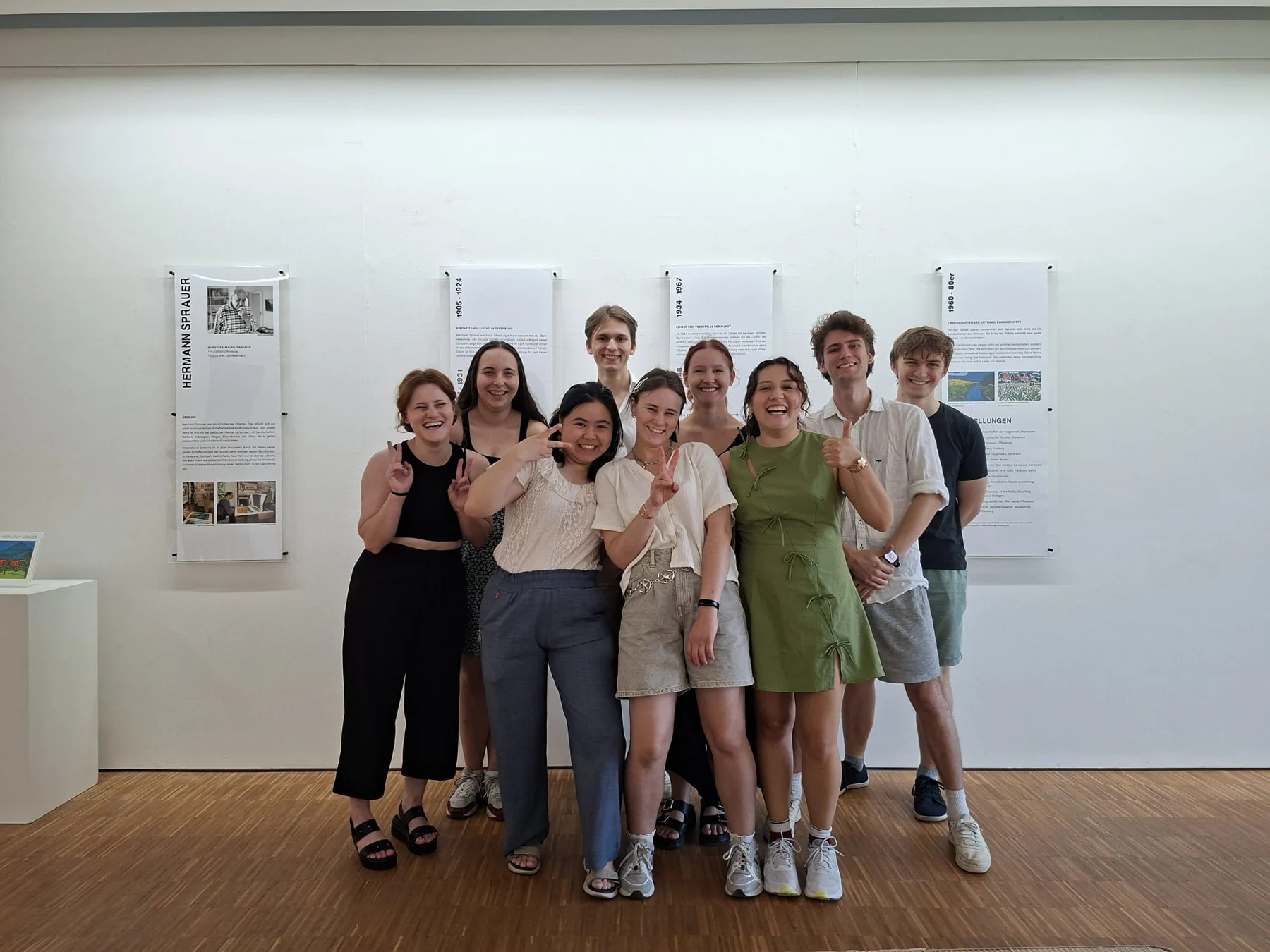
The wider exhibition Hermann Sprauer - Bilder der Ortenau began with original prints from the Stadtarchiv Offenburg. This page documents one contribution only: the 3D/VR station developed around the idea of an Analoges Erbe - Digitales Echo.
Sprauer's colour linocuts turn places in the Ortenau into clear fields of colour, contour, and gesture. My proposal was to preserve that double reading: reconstruct the locations as they are now with Gaussian Splatting, then rebuild their stylized counterparts by hand.
The final Unity experience combines both assets into one navigable space. Visitors can move between a graphic interpretation of the source image and a photorealistic scan of the contemporary place.
- SOURCE
- Ortenau linocuts
- FORMAT
- 3D / VR station
- CAPTURE
- Gaussian Splatting
- LOCATIONS
- Villa Billet / Gymnasiumstraße
- REAL-TIME
- Unity
- TEAM
- Finger / Kranyak / Boos
02 / THE TRANSLATION
The same place, read three ways
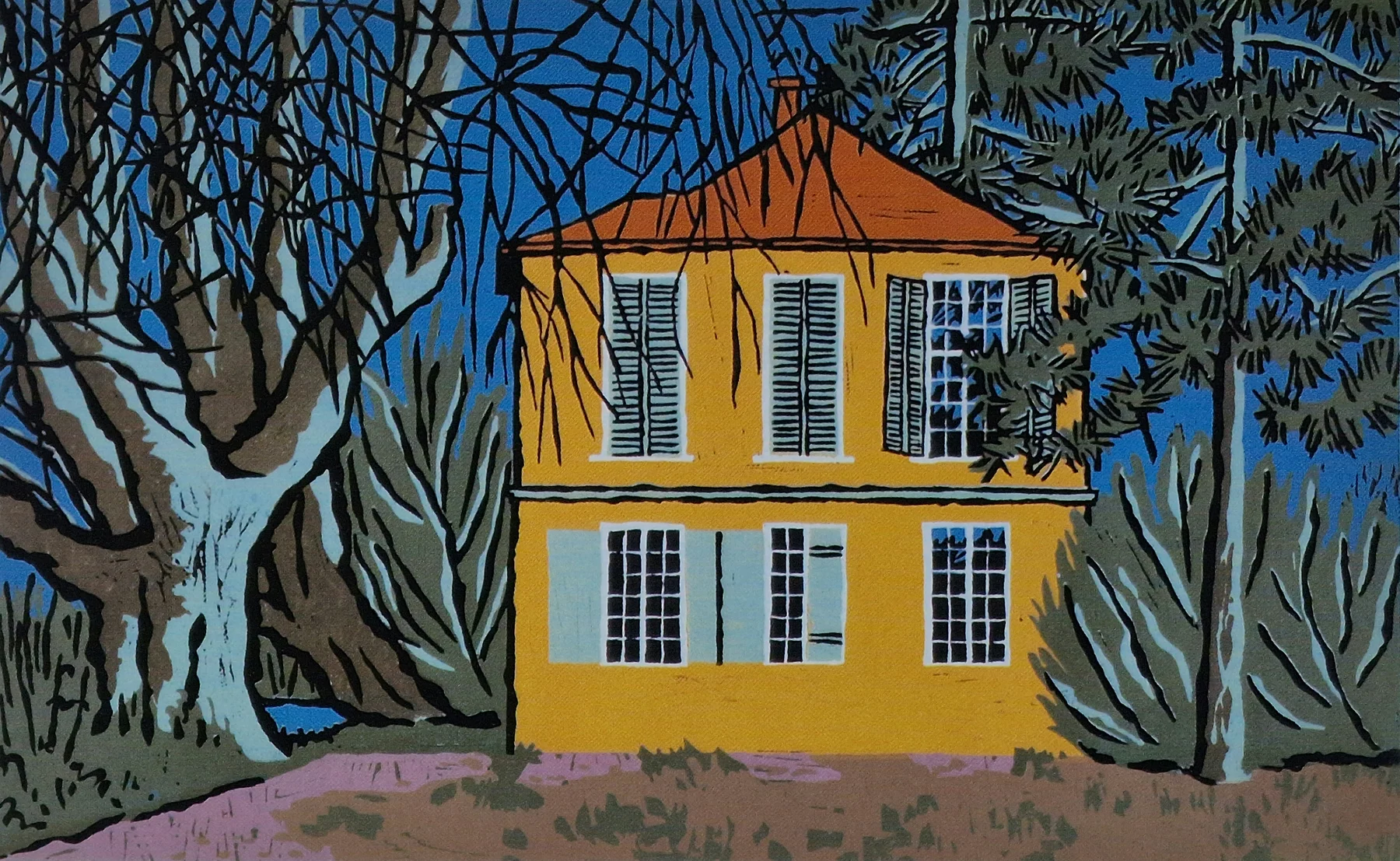
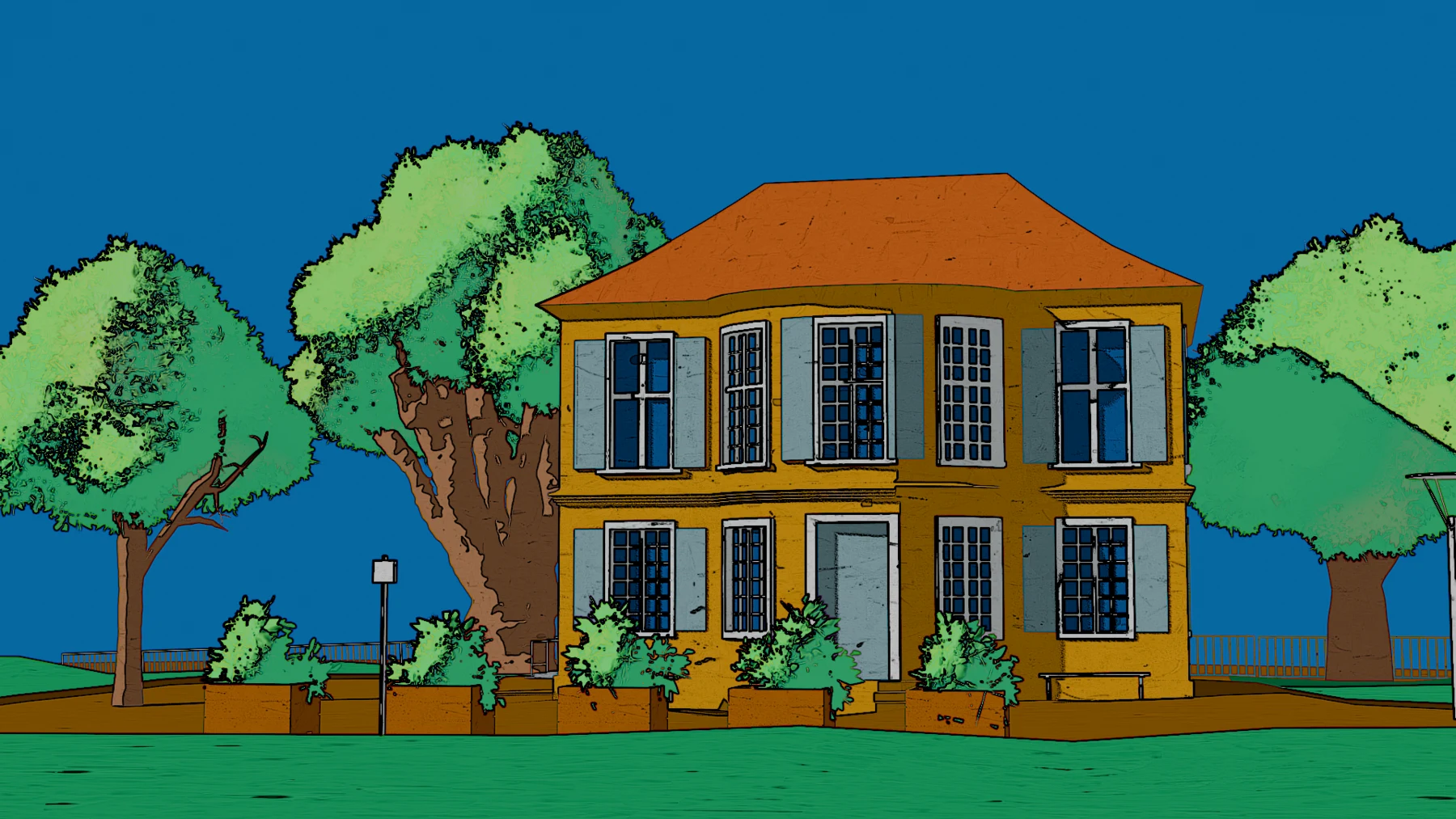
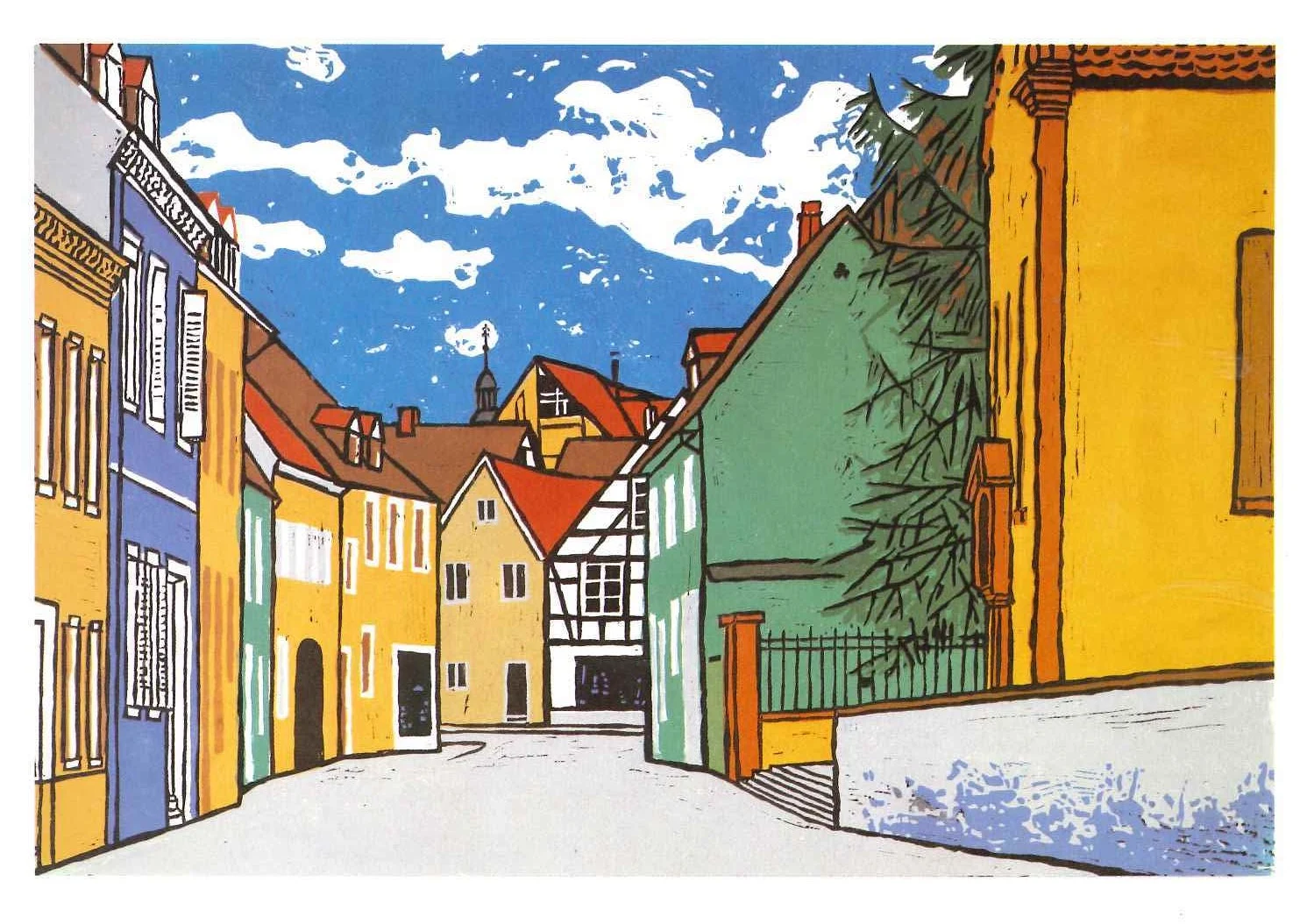
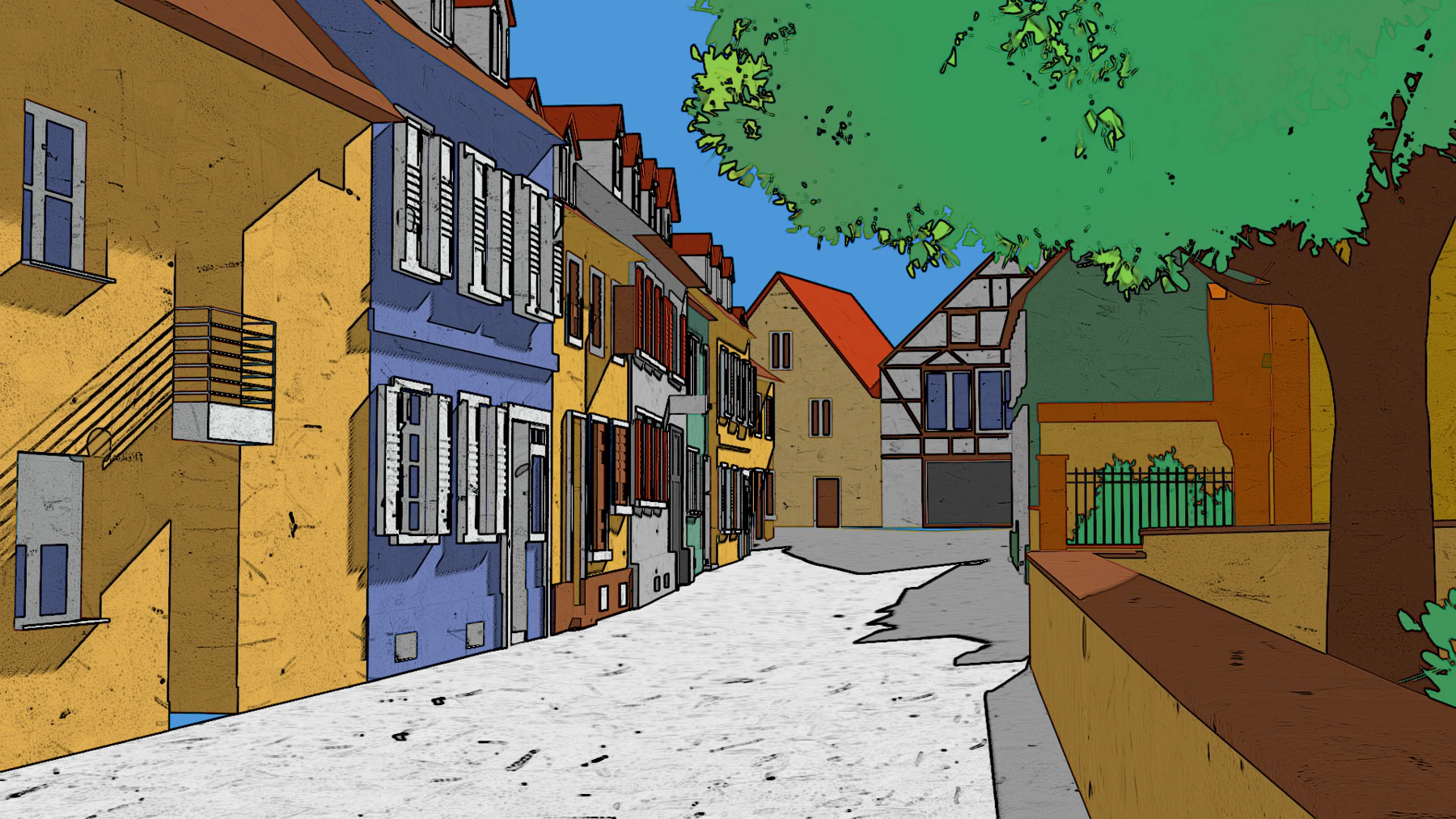
Each location carries the original print into a new visual system. The stylized reconstruction is not a filter applied to the scan; it is a separate, modeled interpretation that keeps the graphic logic of the linocut visible.
01 / LOCATION
Villa Billet
Villa Billet, Offenburg
02 / LOCATION
Gymnasiumstraße
Offenburg
03 / THE CAPTURE
Recording the present before rebuilding it
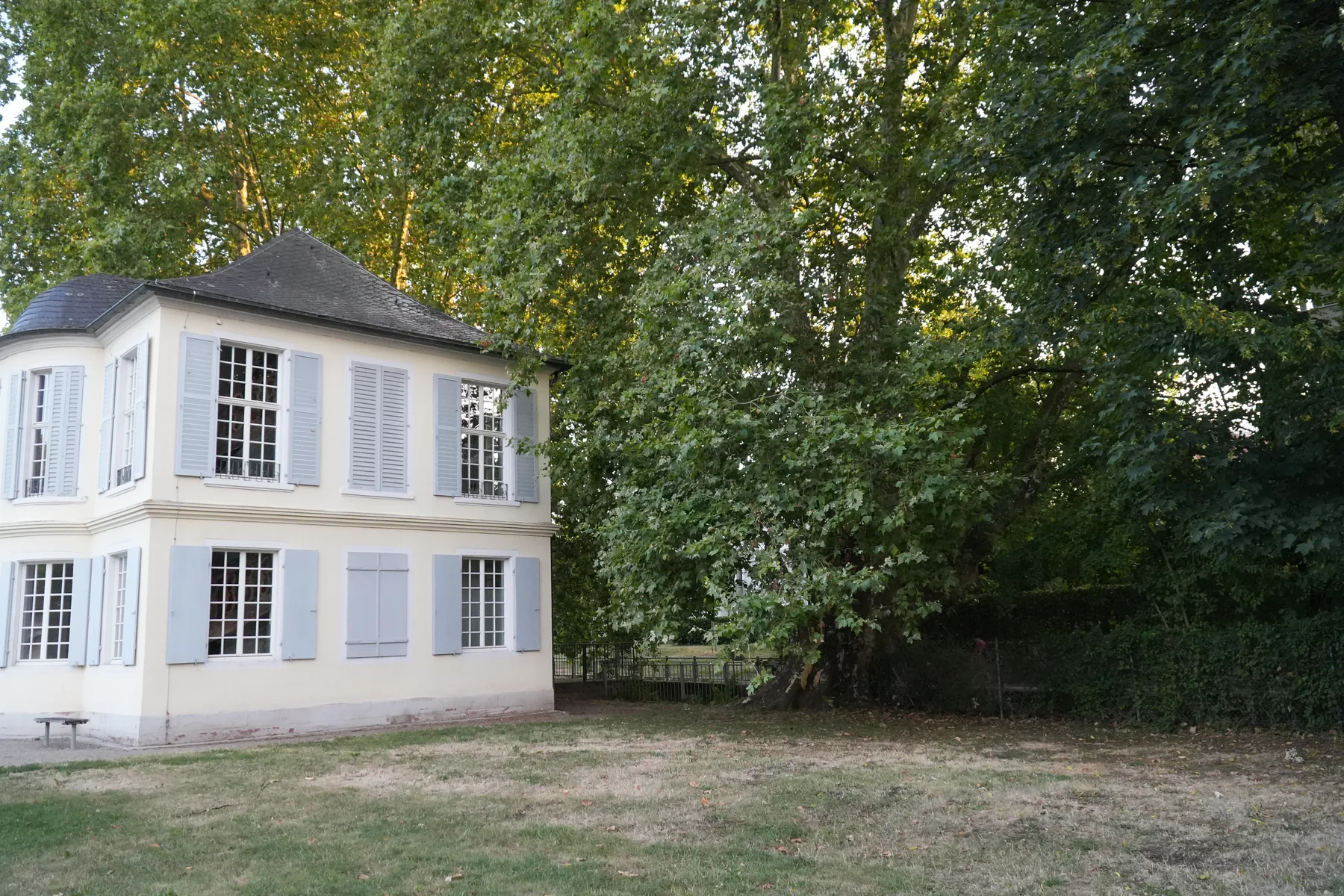
The 3DGS work started on site. I developed the capture and processing pipeline, then prepared the resulting scans for the later real-time exhibition.
Reality Capture, Gaussian Splatting, and Lichtfeld Studio formed the working pipeline from camera data to navigable assets. The scans were optimized for Unity rather than treated as background plates: they became the photorealistic half of the experience and the reference for the stylized reconstruction.
Capture
On-site images and camera data established the present-day locations.
Process
The captures became optimized, navigable Gaussian Splat assets.
Rebuild
The scanned environments were remodeled and retopologized as stylized geometry.
Transfer
Vertex colors carried the graphic language into Unity's final real-time shader.
04 / THE PRESENT
Walk through the scanned locations
The photorealistic scans remain available as interactive Streamed SOG viewers in the Archive. Choose a location to load its viewer, then open the full scan page for metadata and documentation.
PHOTOSCAN / 20 JULY 2026
Villa Billet

PHOTOSCAN / 19 JULY 2026
Gymnasiumstraße

05 / THE STYLIZED VERSION
Rebuilding the image instead of filtering the scan
The graphic scenes were built as their own assets, so the visual language could stay deliberate when the work moved into real-time.
Tim Boos was responsible for the main modeling of the stylized version. I prepared the retopologized scenes and developed the color workflow that connects Blender to Unity. Vertex colors carry the simplified graphic structure into the final shader, keeping the scenes legible as spatial versions of the linocuts rather than photorealistic environments with an effect applied on top.
06 / THE STATION
A real-time exhibition piece
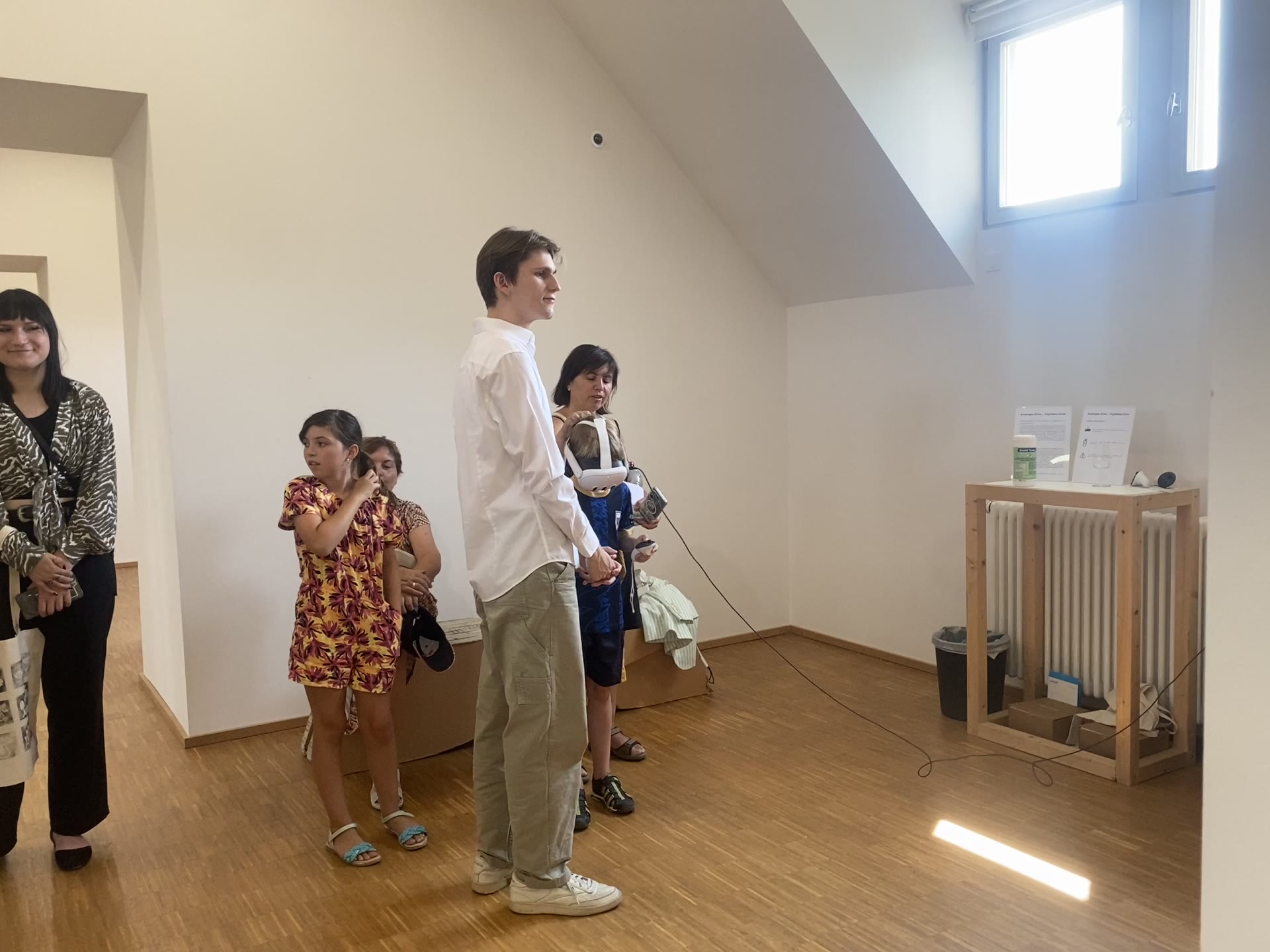
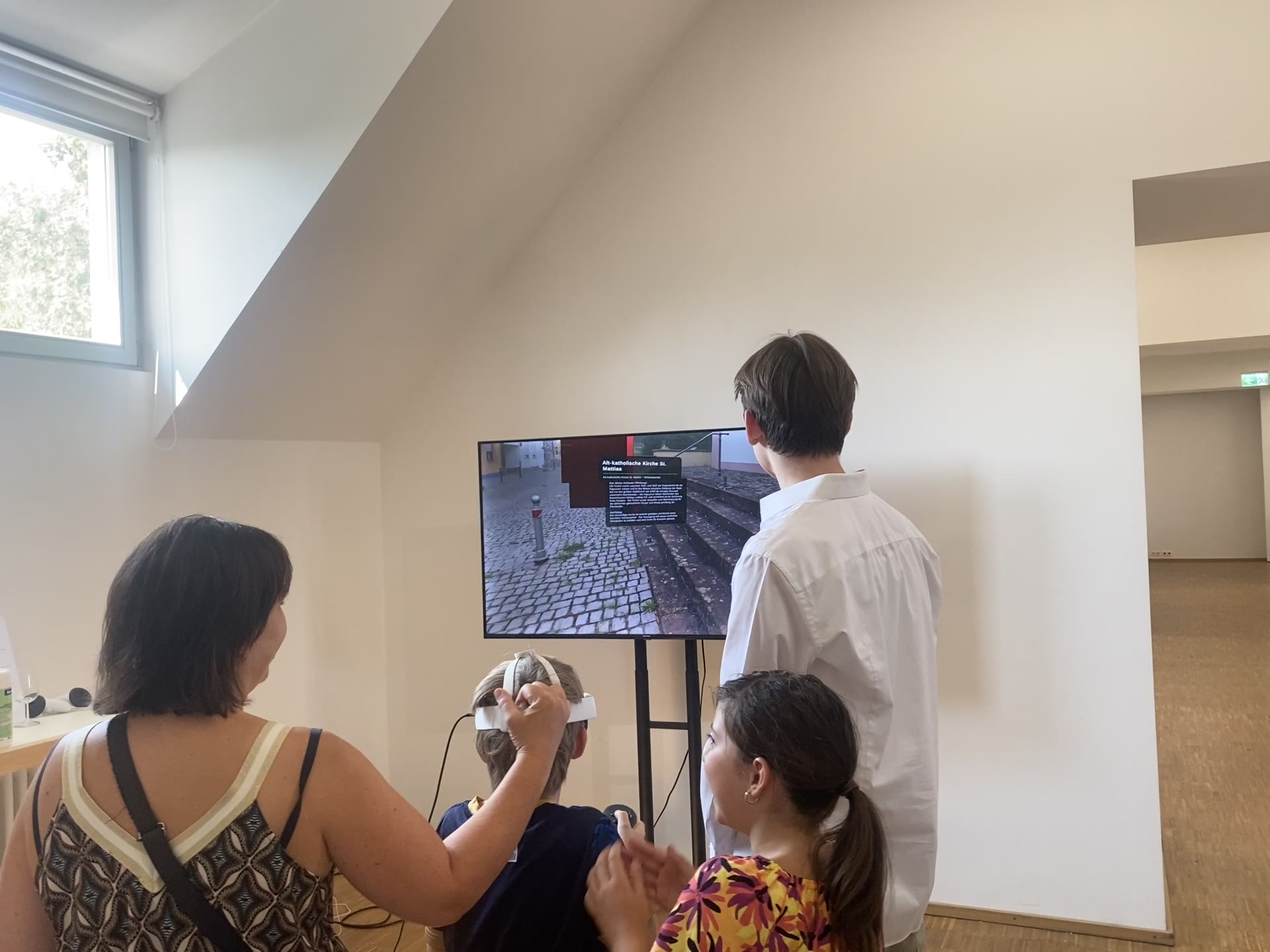
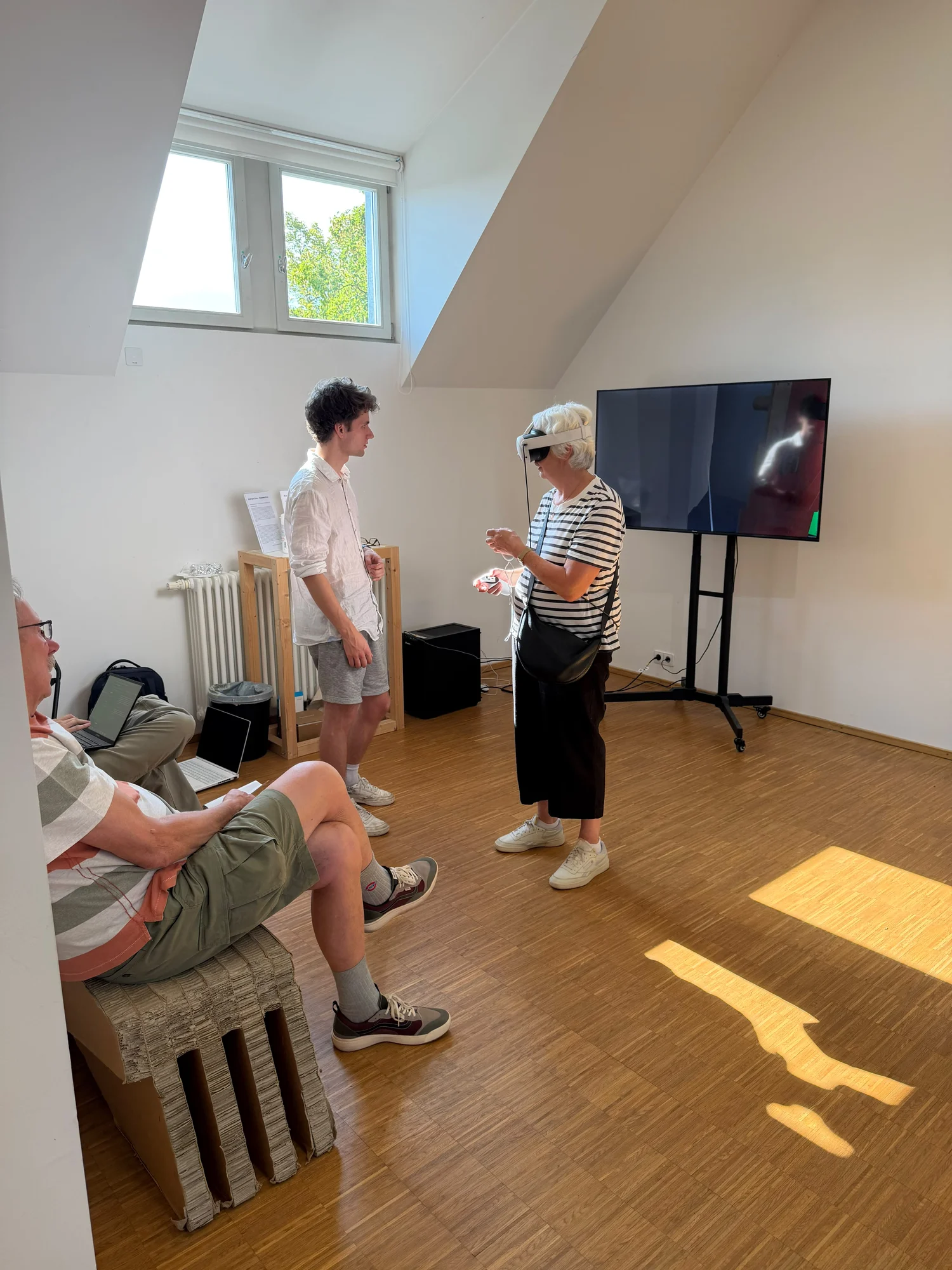
This was one station inside a larger exhibition, not the exhibition in its entirety. The 3D/VR contribution made the movement from historical image to contemporary place tangible through a headset, controller, monitor, and a navigable Unity experience.
07 / REFLECTION
An echo that can be entered
The project connected a fixed historical image with a place that could be explored from inside.
What began as a proposal to combine stylized modeling and Gaussian Splatting became a shared workflow across capture, reconstruction, shading, and real-time implementation. The result is not a replacement for Sprauer's prints. It is a new way of looking at the same landscape: first as an image, then as a constructed world, and finally as a living digital space.
CREDITS
3D / VR station
Part of Hermann Sprauer - Bilder der Ortenau, presented in the context of Analoges Erbe - Digitales Echo.
- Janos Finger
- Concept, 3DGS capture, scan pipeline, scan optimization, stylized preparation, and vertex-color/shader workflow
- Adrian Kranyak
- Unity implementation and real-time VR integration
- Tim Boos
- Main modeling of the stylized version
- Project context
- Hochschule Offenburg, Städtische Galerie Offenburg, and Stadtarchiv Offenburg
